The beauty of a private LoRa network is that it's genuinely yours — no carrier, no per-animal SIM, and it keeps working in mobile dead-zones. Here's the shape of it.
The three pieces
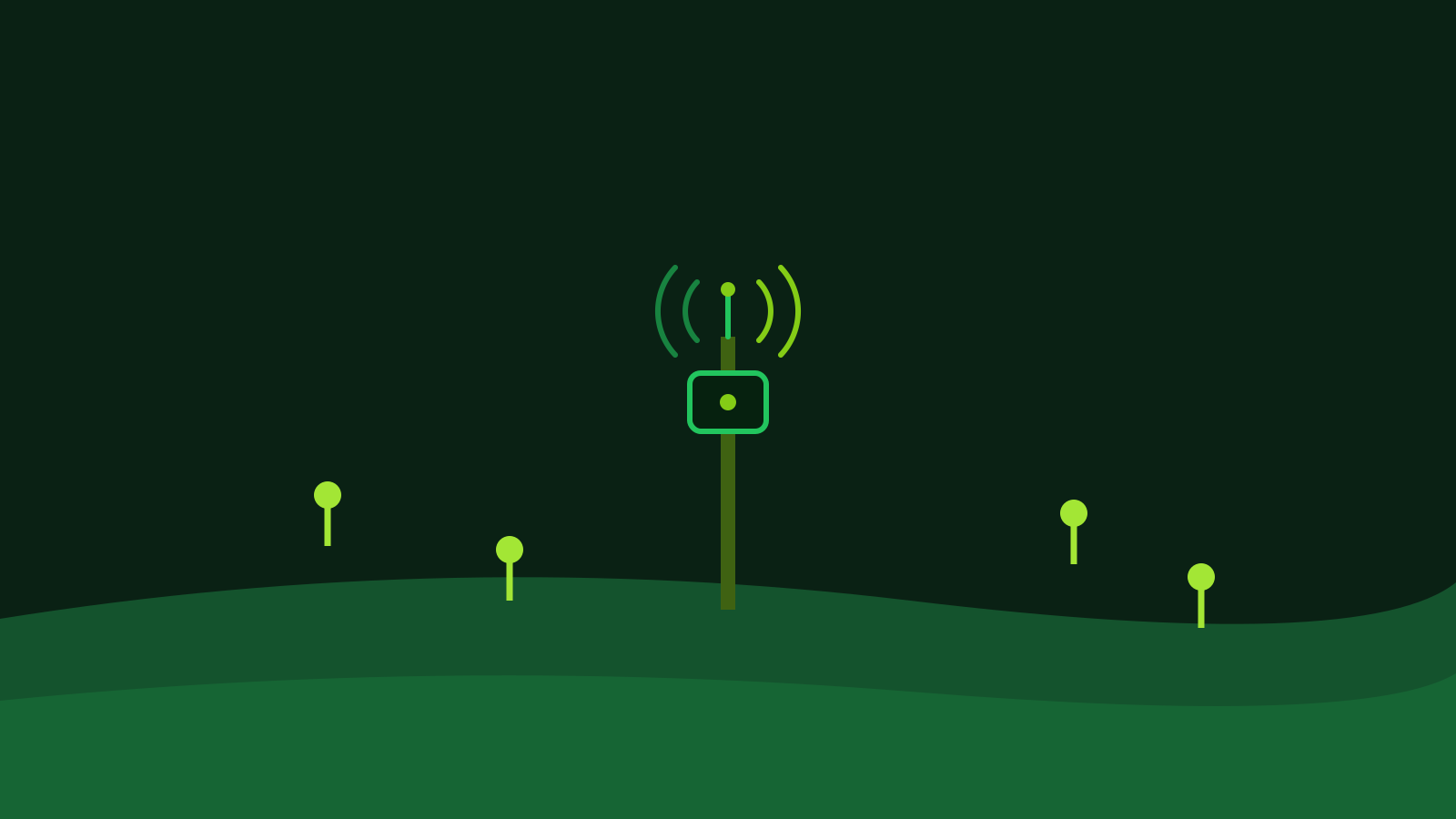
- Gateways — usually solar, mounted high (a shed roof, a hill, a pole). A handful cover most farms; line of sight and elevation matter more than the number.
- ChirpStack — the open-source LoRaWAN network server that manages your devices and decodes their messages. You self-host it cheaply, or run it on a small box on-farm.
- Flockarewe — ChirpStack forwards each uplink to your Flockarewe webhook, where it becomes a position, a geofence check, an alert, and a point on your map.
Getting positions out of tags
GNSS collars decode to a latitude/longitude in ChirpStack's payload formatter. Lighter ear tags are located by the gateways that hear them. Either way, the decoded data flows into Flockarewe through one HTTP integration.
Tip — Point ChirpStack's HTTP integration at your Flockarewe LoRa webhook (event=up) and claim each devEui to the right animal — that's the whole connection.
Start small, expand
Begin with one gateway covering your busiest paddocks and a handful of tags, prove the coverage, then add gateways for the back blocks. Because the network is yours, growing it is just more hardware — no rising data bill per head.
Keep your stock in sight
Tag your stock with LoRa ear tags and collars, watch every paddock on one map, and let Shep flag trouble — all from one app.